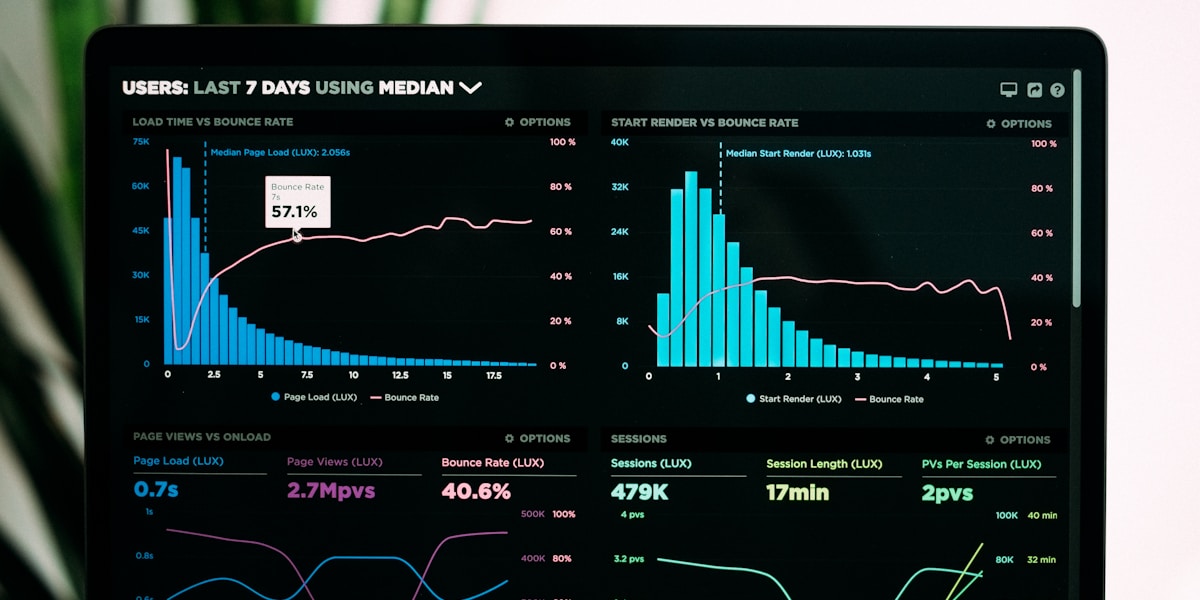
In today's fast- paced digital economy, businesses are generating more data than ever before. F rom customer interactions and sales transactions to operational metrics and ma rket trends, the sheer volume of information can be overwhelming. However, for ward-thinking organizations understand that this data holds immense value—it i s the key to unlocking insights that drive smarter business decisions. At Goso tek, we believe that data analytics is not just a technological capability but a strategic imperative that transforms how companies operate, compete, and gro w in an increasingly complex marketplace.
Understanding the Power of Da ta Analytics
Data analytics refers to the process of examining raw data to draw meaningful conclusions and identify patterns that inform business stra tegy. Unlike traditional decision-making, which often relies on intuition or l imited information, data-driven decision-making empowers organizations to base their strategies on concrete evidence. By leveraging advanced analytics tools and techniques, businesses can uncover hidden opportunities, predict future tr ends, and mitigate risks before they materialize. Whether you are a startup lo oking to optimize your marketing spend or an enterprise aiming to streamline s upply chain operations, data analytics provides the clarity needed to move for ward with confidence.
Enhancing Operational Efficiency
One of th e most immediate benefits of implementing data analytics is the ability to enh ance operational efficiency. Organizations collect vast amounts of data from t heir daily operations, including production cycles, inventory levels, employee performance, and resource utilization. By analyzing this data, businesses can identify bottlenecks, eliminate waste, and optimize processes for maximum prod uctivity. For example, predictive maintenance analytics can help manufacturing companies anticipate equipment failures before they occur, reducing downtime a nd maintenance costs. Similarly, workforce analytics enables HR departments to identify skill gaps, optimize scheduling, and improve employee retention throu gh data-driven engagement strategies.
Personalizing Customer Experience s
In the age of customer-centric business models, understanding your au dience is paramount. Data analytics enables organizations to gain deep insight s into customer behavior, preferences, and purchasing patterns. By analyzing c ustomer data from various touchpoints—including websites, mobile apps, social media, and in-store interactions—businesses can create highly personalized exp eriences that resonate with individual needs. Recommendation engines powered b y machine learning algorithms can suggest products that customers are most lik ely to purchase, while sentiment analysis tools can gauge customer satisfactio n in real-time. This level of personalization not only drives customer loyalty but also increases conversion rates and lifetime value, giving businesses a si gnificant competitive edge.
Driving Strategic Decision-Making
Be yond operational improvements and customer engagement, data analytics plays a crucial role in shaping long-term business strategy. Executive leaders can lev erage business intelligence dashboards and advanced reporting tools to monitor key performance indicators, track progress toward goals, and make informed dec isions about expansion, investment, and innovation. Scenario modeling and pred ictive analytics allow organizations to simulate various business outcomes bef ore committing resources, reducing uncertainty and improving the accuracy of s trategic planning. In an era where market conditions can shift rapidly, the ab ility to adapt quickly based on real-time data insights is a defining characte ristic of successful enterprises.
Mitigating Risks and Ensuring Complia nce
Risk management is another critical area where data analytics deliv ers substantial value. Financial institutions use fraud detection algorithms t o identify suspicious transactions in real-time, while healthcare organization s leverage analytics to ensure compliance with regulatory standards and protec t sensitive patient data. By establishing data-driven risk assessment framewor ks, businesses can proactively identify vulnerabilities, monitor compliance me trics, and implement controls that safeguard their operations. Furthermore, ad vanced analytics can help organizations detect anomalies and emerging threats before they escalate into major issues, enabling faster response times and min imizing potential damage.
Building a Data-Driven Culture
Impleme nting data analytics is not solely a technical endeavor—it requires a fundamen tal shift in organizational culture. Companies that succeed in becoming data-d riven foster environments where employees at all levels understand the value o f data and are empowered to use it in their daily work. This involves investin g in training programs, providing access to user-friendly analytics tools, and encouraging cross-functional collaboration. When data becomes a shared languag e across departments, silos break down, and decision-making becomes more cohes ive and aligned with organizational objectives.
Partnering with Experts for Success
While the benefits of data analytics are clear, many organi zations struggle to implement effective solutions due to technical complexity, resource constraints, or lack of expertise. This is where partnering with an e xperienced IT services provider like Gosotek can make all the difference. Our team of data specialists works closely with clients to understand their unique challenges, design customized analytics solutions, and ensure seamless integra tion with existing systems. From data warehousing and business intelligence to advanced machine learning and artificial intelligence applications, we provide end-to-end services that transform raw data into strategic assets.
In co nclusion, data analytics has evolved from a niche technical capability to a co rnerstone of modern business strategy. Organizations that embrace data-driven decision-making are better positioned to navigate uncertainty, capitalize on o pportunities, and deliver superior value to their customers. As the volume and complexity of data continue to grow, the businesses that thrive will be those that invest in robust analytics infrastructure and cultivate cultures of curio sity and continuous improvement. At Gosotek, we are committed to helping our c lients harness the full potential of their data, turning information into insi ght and insight into impact.